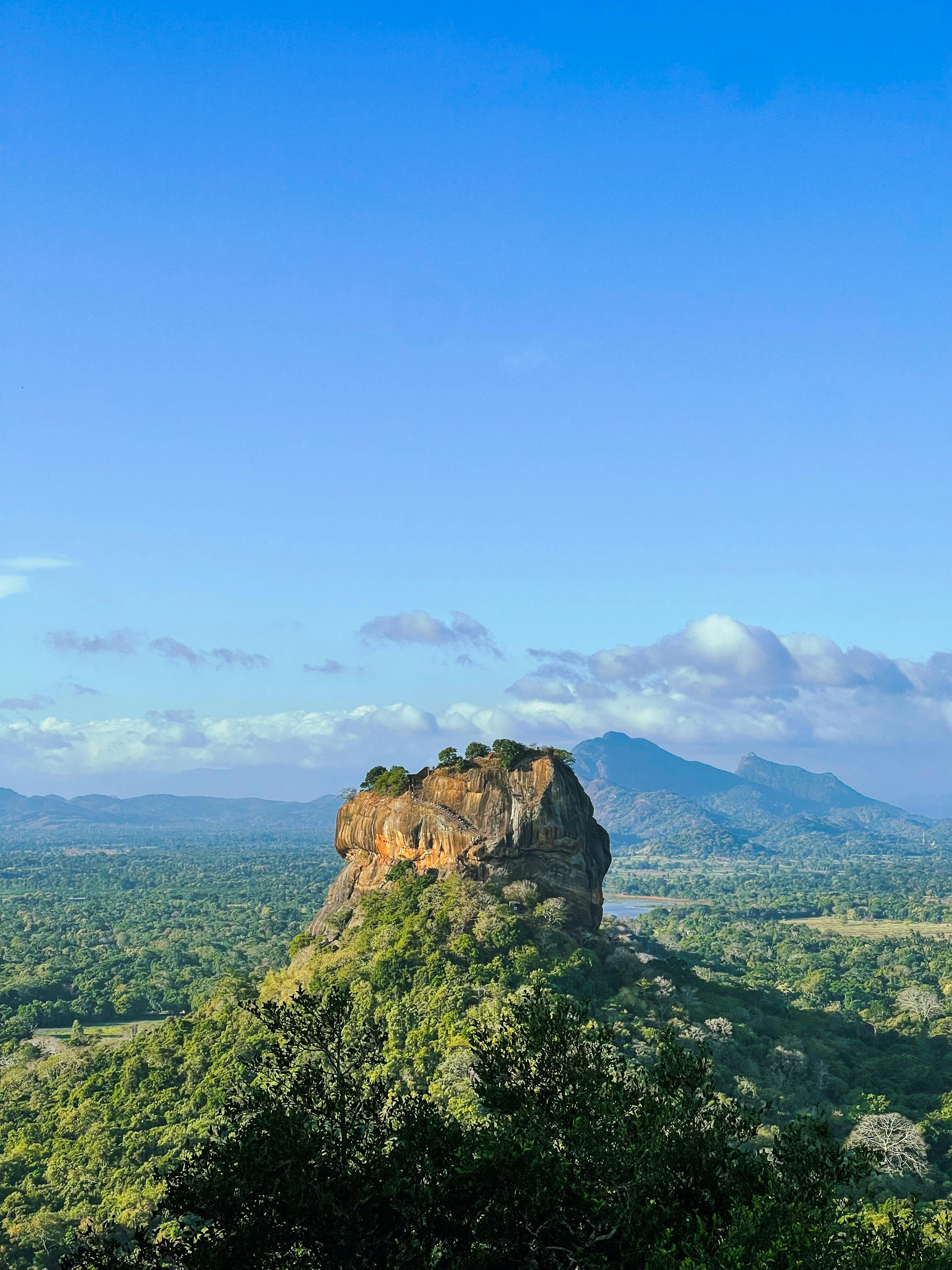
Introduction to the Lion Mountain
Rising abruptly from the lush central plains of Sri Lanka, the 200m-high monolith of Sigiriya is more than just a geological wonder. Known as "Simha-giri" or Lion Mountain, this ancient rock fortress served as a royal capital in the 5th Century AD and remains one of South Asia’s most significant archaeological sites. While many travelers come to conquer the 1,200 steps to the summit, the true genius of Sigiriya lies at its base within its impeccably organized water gardens.
For international travelers and adventure seekers, Sigiriya represents a pinnacle of ancient urban planning. Dating back to 477 AD, it was listed as a UNESCO World Heritage Site in 1982, recognized for its elaborate palace construction and its evocative artwork. However, it is the ingenious hydraulic system—a network of pools, fountains, and streams that still function 1,500 years later—that marks it as a national treasure.
A Royal Soap Opera: The Origins of a Fortress
The story of Sigiriya’s creation reads like a historical drama. Before the rock became a capital, the royal seat of power was in Anuradhapura. A violent coup led by King Kasyapa, the son of King Dhatesena and a non-royal consort, resulted in the death of the former king and Kasyapa seizing the throne.
Fearing retribution or perhaps seeking to establish a new legacy, Kasyapa moved the capital to Sigiriya. He envisioned a palace that resembled a squatting lion, with massive stone paws serving as the gateway to the summit. Beyond security, Kasyapa used the site’s opulence to project power and ingenuity to his rivals and the powerful Mahavihara monks.
The Hydraulic Engineering Marvel
The water gardens at Sigiriya are among the oldest landscaped gardens in the world. To the 5th-century guest, the entrance would have looked like a modern luxury resort, featuring a brilliant combination of symmetrical and asymmetrical forms.
The system’s "genius" is found in its reliance on hydraulic power and gravity. While folklore once suggested the water flowed from the top of the rock down, the reality is far more complex
Source: The primary water source is a nearby reservoir known as a "tank".
Conduit System: Terracotta pipes buried at varying depths use gravitational force to transport water from the tank, which sits at a slightly higher elevation than the gardens.
Pressure: This pressure allows the garden's signature fountains to bubble up about four or five inches without the use of modern pumps.
Rainwater Integration: On the summit, rainwater fills large pools and cisterns cut into the rock, which then feed back into the underground system to supplement the supply.
Exploring the Garden Tiers
The gardens consist of three distinct but interlinked sections that provide a cooling effect and aesthetic appeal.
The Miniature Water Gardens
Despite the name, these gardens are substantial, measuring 30m wide and 90m long. They feature snake-shaped streams and pebbled floors covered by shallow, moving water. Archaeologists believe these areas were used for musical performances, as the platforms within the ponds suggest a stage for ancient entertainers.
The Fountains and Pools
The fountains at Sigiriya are a highlight for any visitor. Built from limestone plates with symmetrical holes, they spring to life during the yearly monsoon rains. These were likely used by the royal family and Kasyapa’s consorts as a way to find relief from the intense South Asian sun.
The Boulder and Terraced Gardens
Moving toward the rock, the landscape shifts from the geometric precision of the water gardens to the organic, asymmetrical cave and boulder gardens. These lead to the stepped terraces that circle the monolith, guiding travelers toward the final ascent.
Visiting Sigiriya Today
When you stand at the summit and look down, the layout of the water gardens is perfectly centered and aligned, a testament to the masterful knowledge of physics possessed by ancient Sri Lankan engineers. During the rainy season, the experience is ethereal, with clouds sitting on the hill and fountains gushing water throughout the precinct.
For families and eco-tourists visiting the region, Sigiriya offers a profound look at how ancient civilizations lived in harmony with their environment, utilizing natural resources to create beauty and functionality that has outlasted empires.
Reference:
Sigiriya: Sri Lanka’s Ancient Water Gardens