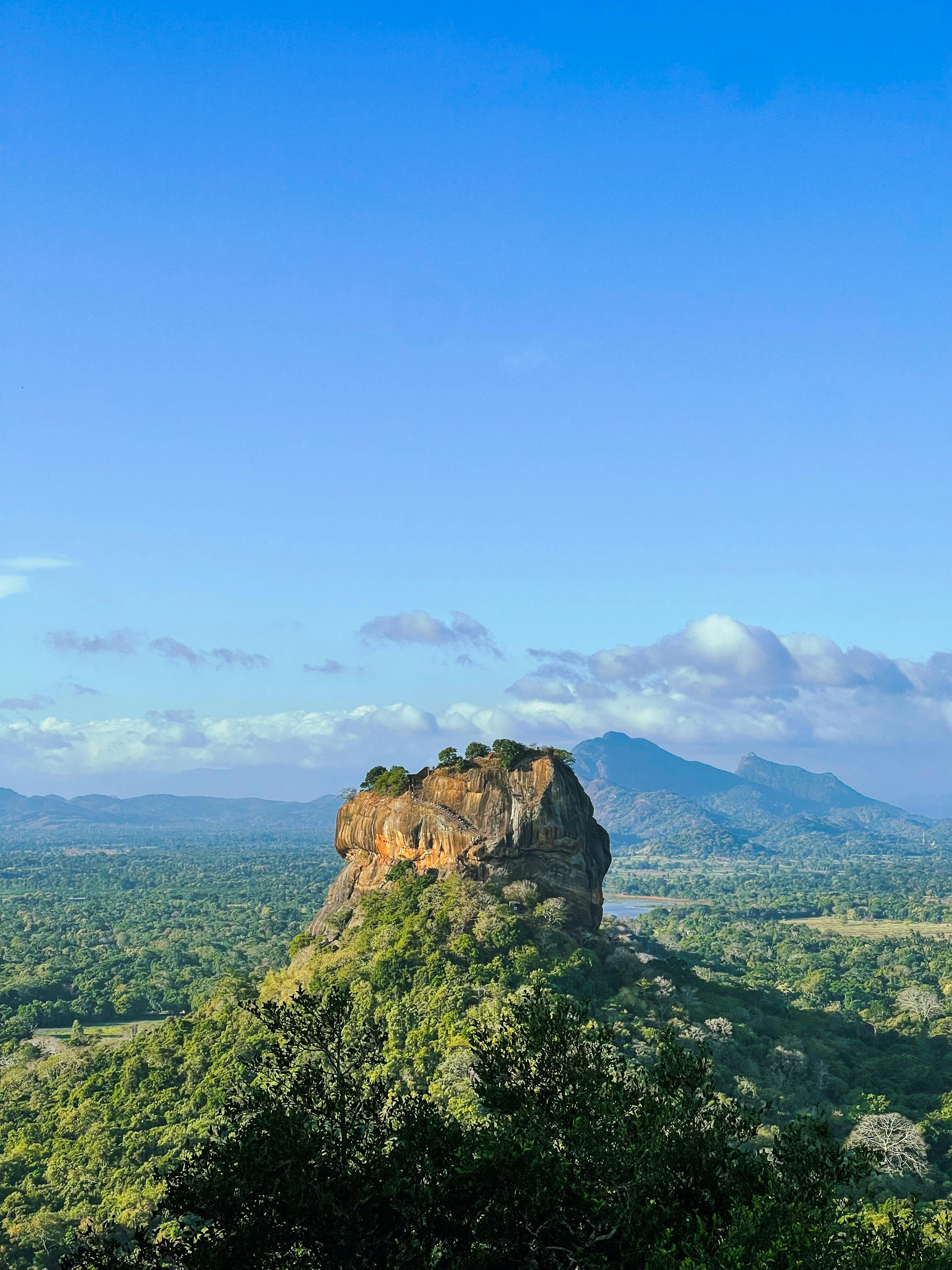
What if the teardrop-shaped island had never existed? A journey through an alternate timeline that might surprise you.
The Missing Piece
Imagine looking at a world map and seeing nothing but open ocean where Sri Lanka should be. Just empty blue water stretching between India's southern tip and the Maldives. It seems like such a small change – one island, gone. But pull that thread, and the entire tapestry of human history begins to unravel in ways you'd never expect.Let me take you on a journey through this alternate world, where the absence of a single island nation created ripples that reached every corner of the globe.
The Buddhism That Never Spread
In our timeline, a young woman named Sanghamitta carried a precious gift from India to Sri Lanka in 288 BCE – a cutting from the very tree under which Buddha found enlightenment. But in our imagined world, there was no island to receive this gift.Without Sri Lanka as Buddhism's first foreign home, the religion struggled to take root beyond India's borders. The careful monks who would have preserved Buddha's teachings in written form for the first time never existed. Instead of spreading peacefully across Southeast Asia through Sri Lankan missionaries, Buddhism remained largely confined to its birthplace.
Picture Thailand, Myanmar, Laos, and Cambodia today. In our alternate world, these nations developed entirely different spiritual traditions. The golden temples of Bangkok, the serene monasteries of Bagan, the gentle philosophy that shaped millions of lives – none of it existed. Instead, these regions remained dominated by Hindu kingdoms and local animistic beliefs, creating a Southeast Asia we wouldn't recognize.
The Tea Revolution That Never Happened
Fast forward to the 1800s. British colonists in India are struggling with their coffee plantations, destroyed by disease. In our world, they turned to the misty mountains of Ceylon and discovered that tea could grow magnificently in those highland estates.But without Sri Lanka, this never happened.
The British continued their desperate search for alternatives, eventually establishing tea plantations in the Himalayas and parts of Africa, but the unique flavor that would become "Ceylon tea" never existed. The afternoon tea culture that defined British society developed around entirely different blends – perhaps bitter Assam teas or the delicate flavors from Chinese imports that remained prohibitively expensive.
More importantly, without Ceylon tea's success, the entire model of plantation agriculture that spread across tropical colonies evolved differently. The hill station culture, the coolie labor system, the economic patterns that shaped colonial policy – all of it took different forms.
The Spice Routes Reimagined
Here's where it gets interesting. Ancient traders sailing between Arabia and Southeast Asia had always used Sri Lanka as a crucial stopping point. The island's cinnamon was so prized that it drew merchants from across the known world. But without this waystation, maritime trade routes developed entirely different patterns.Ships were forced to hug India's coast more closely or make the dangerous direct journey across the Bay of Bengal. This meant that different ports rose to prominence. Perhaps Kochi in India became the dominant spice hub, or maybe trading patterns shifted so dramatically that the Dutch and Portuguese colonial empires focused their energies elsewhere entirely.
Without Sri Lankan cinnamon flooding European markets, this precious spice remained incredibly rare. European cuisine developed without ever knowing its warm sweetness. Christmas cookies, mulled wine, and countless dishes that define comfort food across the West evolved with completely different flavor profiles.
The Medical Knowledge Lost to Time
In ancient Sri Lanka, physicians developed surgical techniques that were centuries ahead of their time. They performed cataract surgery, set complex bone fractures, and created medical texts that influenced healing practices across South Asia.Without this island laboratory of medical innovation, the development of surgical techniques across the region lagged significantly. The knowledge that would have spread to India, Southeast Asia, and eventually to the Arab world through trade connections never emerged.
Traditional medicine evolved along different paths, and who knows what life-saving techniques were never discovered or shared?
The Writing That Shaped Nations
The Sinhala script that developed in Sri Lanka influenced writing systems across Southeast Asia. But in our alternate timeline, these nations developed entirely different ways of recording their languages.Without Sri Lankan monks and scholars traveling throughout the region, the intellectual exchange that shaped literature, law, and administration took different forms. Ancient inscriptions in Thailand and Cambodia would look completely alien to us, carved in scripts that evolved from entirely different sources.
The ripple effects reached even further. If Buddhist texts hadn't been preserved in Pali script in Sri Lankan monasteries, the philosophical and literary traditions of half of Asia would have developed along completely different lines.
The Political Revolution That Never Came
In 1948, Sri Lanka became one of the first Asian colonies to gain independence through largely peaceful means. Three years earlier, they had achieved something remarkable – universal suffrage, including votes for women, before many Western nations.But perhaps more importantly, Sri Lanka pioneered something that changed the developing world: free healthcare and education for all citizens. In 1931, they proved that a small, relatively poor nation could still provide basic services to everyone.
Without this example, the post-colonial world might have developed very differently. The idea that developing nations could achieve high literacy rates and health outcomes without wealth spread from Sri Lanka's success story. Other newly independent countries looked to this model and adapted it to their own circumstances.
In our alternate timeline, without this proof of concept, many developing nations might have struggled longer with basic education and healthcare, fundamentally altering the trajectory of global development.
The Cultural Bridge That Never Was
Sri Lanka sat at the crossroads of civilizations – Indian, Arab, Southeast Asian, and later European influences all met and blended on this island. The unique cultural synthesis that emerged influenced art, architecture, music, and literature across the region.Without this cultural laboratory, the artistic traditions of South and Southeast Asia evolved in isolation from each other. The distinctive architectural styles, the fusion music traditions, the literary forms that emerged from this cross-cultural pollination never existed.
Even more intriguingly, the island served as a refuge for ideas and practices that were lost elsewhere. When invaders destroyed Buddhist universities in India, Sri Lankan monasteries preserved crucial texts. When political upheavals scattered scholars, the island offered sanctuary.
Without this safe haven, countless works of philosophy, science, and literature simply vanished from human knowledge forever.
The Ripple Effects We Never Saw Coming
As we trace these threads through history, the changes compound in unexpected ways. European colonial strategies shifted without Sri Lankan harbors to control Indian Ocean trade. The development of maritime technology took different paths without the need to navigate around or stop at the island.World War II in the Pacific might have unfolded differently without Colombo as a strategic Allied base. The Japanese advance into the Indian Ocean could have taken entirely different directions, potentially altering the war's outcome in ways we can barely imagine.
Even something as simple as global weather patterns changed. Sri Lanka's mountains created unique monsoon effects that influenced rainfall across southern India. Without these weather patterns, agriculture across the region developed differently, supporting different population densities and urban centers.
The Modern World We Lost
Today, in our alternate timeline, the world feels subtly but profoundly different. Southeast Asian cities don't ring with temple bells at dawn. British culture developed around different rituals of hospitality. The developing world struggled longer to prove that universal healthcare was possible for poor nations.The Indian Ocean stretches unbroken between continents, and ships cross it following routes that seem natural to people in this timeline but would appear strange to us. The spice markets of Europe smell different, the medical traditions of Asia evolved along different paths, and the religious landscape of half the world bears no resemblance to what we know.
Perhaps most importantly, the gentle philosophy of Buddhism remained largely confined to its birthplace, never spreading its message of compassion and mindfulness to hundreds of millions of people across Asia and eventually the world.
What We Can Learn
This thought experiment reveals something profound about how history works. Small places can have enormous impacts. A single island, home to just 22 million people today, helped shape the religious beliefs of over 500 million Buddhists worldwide, influenced the daily rituals of tea drinkers from London to Moscow, and provided a model for healthcare and education that developing nations still follow today.It reminds us that every culture, no matter how small, contributes threads to the vast tapestry of human civilization. Pull out any single thread, and patterns we take for granted begin to shift in ways we never expected.
The next time you sip a cup of Ceylon tea, visit a Buddhist temple, or read about a developing nation providing free healthcare to its people, remember the small island that made it all possible. In the grand sweep of history, sometimes the smallest places cast the longest shadows.
After all, the world without Sri Lanka isn't just missing an island – it's missing a crucial piece of what makes us human.