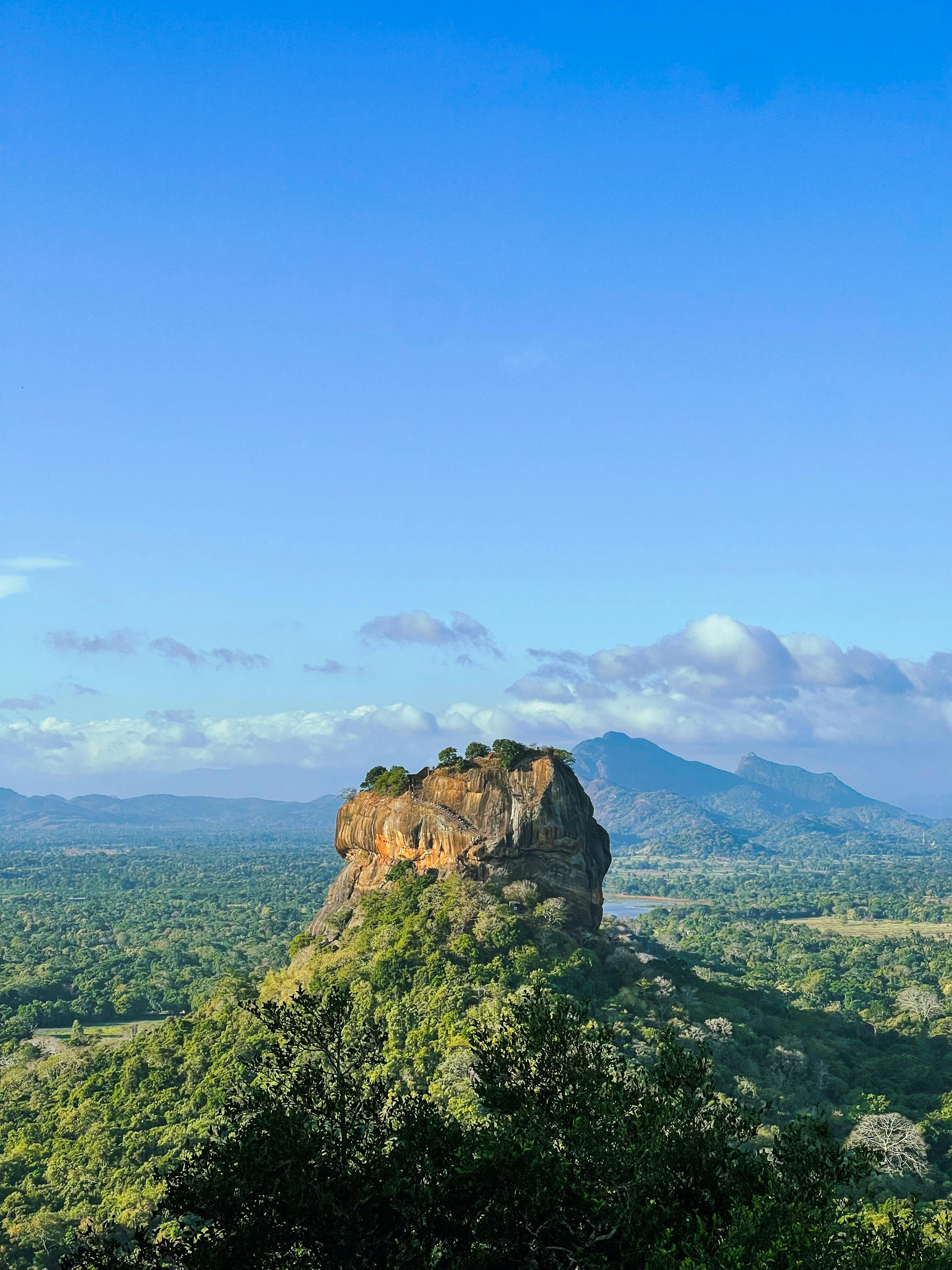
The Vanished Island: How the World Would Change Without Sri Lanka - II
By Rainforest Vibe Team
The Island That Evolution Forgot: What Earth Lost When Sri Lanka Vanished
When nature's most daring experiment disappeared, the planet's biodiversity took a hit that echoed across continents
The Laboratory That Never Was
Picture this: 165 million years ago, a chunk of ancient supercontinent Gondwana broke away and began a slow-motion journey across the Indian Ocean. This wandering piece of land would eventually crash into Asia, creating something extraordinary – an island laboratory where evolution could run wild.
But what if that fragment had simply dissolved into the ocean depths instead? What if Sri Lanka – nature's most ambitious experiment in biodiversity – had never existed at all?
The answer might surprise you. This tiny island, smaller than Ireland, was destined to become one of the planet's most crucial biological treasure chests. Without it, our natural world would be missing some of its most remarkable creations.
The Elephants That Never Learned to Whisper
Deep in the forests that never grew, a unique evolutionary story never unfolded. In our timeline, Asian elephants that arrived on the island thousands of years ago began adapting to dense jungle life. Over generations, they developed something remarkable – the ability to communicate through infrasound frequencies so low that humans can't hear them.
These Sri Lankan elephants learned to "whisper" to each other across miles of thick forest, coordinating their movements through subsonic conversations that traveled through the ground itself. But without the island's unique forest structure and the isolation that drove this adaptation, this incredible form of communication never evolved.
In our alternate Earth, elephant communication remained limited to the trumpeting calls we know. The sophisticated network of infrasonic conversations that allowed herds to coordinate across vast distances simply never developed. Wildlife researchers studying elephant behavior would be missing a crucial piece of the puzzle about how these intelligent giants can truly communicate.
The Rainforest That Defied Logic
Here's where nature gets really creative. Sri Lanka was supposed to become home to something that shouldn't exist – a tropical rainforest in the wrong place. The Sinharaja Forest Reserve sits in a location that should, by all meteorological logic, be much drier. But the island's unique topography creates its own weather system, trapping monsoon moisture and creating a rainforest in a spot where one has no business existing.
Without this geographical anomaly, the world lost a unique ecosystem that housed species found nowhere else on Earth. In Sinharaja, evolution was writing its own rules, creating creatures that adapted to this impossible rainforest.
The Purple-faced Langur, a monkey with a face that looks like it's wearing dramatic makeup, never swung through canopies that never grew. These primates developed unique feeding behaviors, eating leaves that would be toxic to other monkeys, thanks to specialized bacteria in their stomachs that evolved specifically for this forest's unusual plant life.
Without this evolutionary laboratory, the world missed out on understanding how life adapts to "impossible" environments – knowledge that could be crucial as our climate changes and species need to adapt to new conditions.
The Leopards That Became Kings
In most of the world, leopards live in the shadow of bigger cats – lions, tigers, jaguars. They're magnificent, but they're not the apex predator. Sri Lanka changed all that.
With no tigers or lions to compete with, Sri Lankan leopards evolved differently. They grew larger, bolder, and more confident. They became the undisputed kings of their jungle, developing hunting behaviors and social patterns that their mainland cousins never could.
These island leopards learned to hunt in broad daylight, something most leopards avoid. They developed different territorial behaviors, different mating patterns, and even different physical characteristics. They represent a fascinating glimpse into what leopards could become when freed from competition with other big cats.
Without Sri Lanka, this evolutionary experiment never happened. Scientists studying big cat behavior lost a crucial data point about how apex predators develop when environmental pressures change. The insights about predator evolution that could help us understand ecosystem balance simply vanished with the island.
The Bird That Time Forgot
Perhaps the most heartbreaking loss in our alternate timeline is a bird that sounds like something from a fairy tale – the Sri Lanka Blue Magpie. This stunning creature, with feathers the color of a tropical sky and a tail longer than its body, evolved in isolation until it became something magical.
Blue Magpies are among the most intelligent birds on Earth, capable of using tools, solving complex problems, and even showing what appears to be empathy for other birds. The Sri Lankan species developed unique behaviors, including an unusual cooperative breeding system where multiple generations help raise young together.
But here's the truly remarkable part – these birds became living fossils. They retained characteristics that their mainland relatives lost over millions of years of evolution. They were like a biological time capsule, showing us what ancient corvids looked like before they evolved into the crows and ravens we know today.
Without this island sanctuary, this evolutionary timeline was lost forever. Researchers studying bird intelligence and evolution missed crucial insights about how corvid intelligence developed and how cooperation evolves in bird societies.
The Coral City That Never Rose
Beneath the waves that lap against shores that never formed, an underwater metropolis never came to be. Sri Lanka's coastal waters were destined to host some of the most diverse coral reefs in the Indian Ocean, but without the island's unique underwater topography, this marine wonderland never developed.
The island's position created perfect conditions for coral growth – the right depth, the right water temperature, the right currents. Over millennia, these reefs became home to species that exist nowhere else on Earth.
The Pseudanthias hypselosoma, a fairy basslet so colorful it looks like a living jewel, never evolved in the coral gardens that never grew. This tiny fish, with its impossible combination of pink, orange, and yellow, represents thousands of years of evolutionary fine-tuning to match its coral home perfectly.
More importantly, these reefs served as nurseries for fish species that migrated across the entire Indian Ocean. Without these crucial breeding grounds, fish populations across the region developed along entirely different patterns, affecting marine ecosystems from East Africa to Southeast Asia.
The Web of Life Unraveled
As we follow these missing threads through the natural world, the impacts compound in ways that might seem impossible. Without Sri Lankan elephants developing infrasonic communication, researchers studying animal cognition missed crucial insights about how intelligence evolves in isolation.
The missing rainforest meant that hundreds of plant species never evolved, including several that might have held the keys to new medicines. Traditional healers on the island had identified plants with unique properties that mainstream science was just beginning to study when our alternate timeline began.
The absent coral reefs disrupted ocean currents in subtle ways, affecting weather patterns across the Indian Ocean. Fish migration routes that depended on these reefs as waypoints never developed, changing the entire marine food web of the region.
The Climate Clues We Never Found
Perhaps most critically for our modern world, Sri Lanka's unique position made it a natural laboratory for understanding how climate change affects island ecosystems. The island's diverse elevation zones – from sea-level coasts to mountain peaks – created a natural gradient that scientists use to understand how species respond to temperature changes.
Without this living laboratory, researchers studying climate adaptation lost crucial data. The island's endemic species had evolved specific strategies for dealing with monsoon variations, temperature fluctuations, and seasonal changes. These strategies could have provided blueprints for helping other species adapt to our changing climate.
The mountain forests that never grew would have served as refugia – safe havens where species could retreat during climate upheavals. These high-altitude sanctuaries have helped species survive ice ages and warming periods for millions of years. Without them, the region's biodiversity had nowhere to hide during climate crises.
The Modern Conservation Crisis
Today, in our alternate timeline, conservationists face a crisis they don't even realize they're missing. Without Sri Lanka's success stories – like bringing the elephant population back from near extinction or protecting the last fragments of ancient rainforest – the global conservation movement lacks crucial case studies.
The island became a testing ground for innovative conservation approaches, from human-elephant conflict resolution to community-based forest protection. These methods, refined in Sri Lanka's unique conditions, spread to conservation projects worldwide.
Wildlife corridors, now used globally to help animals move safely between protected areas, were pioneered partly based on Sri Lankan elephant migration patterns. Without this model, conservation efforts worldwide are less effective, and more species face extinction in isolated habitat fragments.
The Genetic Library That Never Opened
In the deepest tragedy of our alternate timeline, we lost access to a genetic library that took millions of years to write. Sri Lanka's isolated position allowed evolution to experiment with combinations of genes that don't exist anywhere else on Earth.
The island's endemic species carried genetic solutions to problems that other animals haven't encountered yet. Adaptations to specific diseases, unique methods of processing certain foods, novel approaches to surviving in changing climates – all of this genetic wisdom disappeared with the island.
Modern biotechnology is beginning to unlock the secrets held in the DNA of unique species. Medicines, agricultural improvements, and solutions to environmental challenges often come from studying how different species solve biological problems. Without Sri Lanka's unique genetic heritage, human innovation lost a crucial resource.
What We Learn from the Void
This thought experiment reveals something profound about how nature works. Biodiversity isn't just about having lots of different animals and plants – it's about having living laboratories where evolution can experiment with new solutions to life's challenges.
Every isolated ecosystem, no matter how small, represents millions of years of evolutionary research and development. When we lose these natural laboratories, we lose more than just pretty animals and plants. We lose potential solutions to problems we haven't even encountered yet.
Sri Lanka, despite being just 0.012% of the Earth's land surface, was home to a disproportionate amount of the planet's biodiversity. Its loss would have created ripple effects throughout the natural world that we're only beginning to understand.
The next time you see a nature documentary featuring Sri Lankan leopards hunting in daylight, or read about elephant communication research, or learn about innovative conservation techniques, remember the tiny island that made it all possible.
In nature's grand experiment, sometimes the smallest laboratories produce the most important discoveries. The island that evolution built taught us that in biodiversity, as in life, it's often the smallest voices that have the most important things to say.
After all, in a world without Sri Lanka, we wouldn't just be missing an island – we'd be missing millions of years' worth of nature's most creative problem-solving.